Shipping Guide Between Malaysia and Singapore
Introduction
Malaysia and Singapore share one of Southeast Asia’s most active trade relationships. In 2025, bilateral trade reached RM402.8 billion, making Singapore Malaysia’s second-largest trading partner and its largest within ASEAN. For businesses, this means a constant flow of products, materials, and inventory across the border.
But shipping between the two countries involves more than simply arranging transportation. Getting the right processes in place from the start can make all the difference to a smooth delivery. This guide covers the key costs, documents, customs processes, and practical considerations for shipping between Malaysia and Singapore.
What Is Shipping?
Shipping is the process of moving goods from one location to another using a transportation network.
The exact process depends on the type of goods, transportation method, shipment value, and whether the products are controlled or subject to special regulations.
Shipping Options Between Malaysia and Singapore
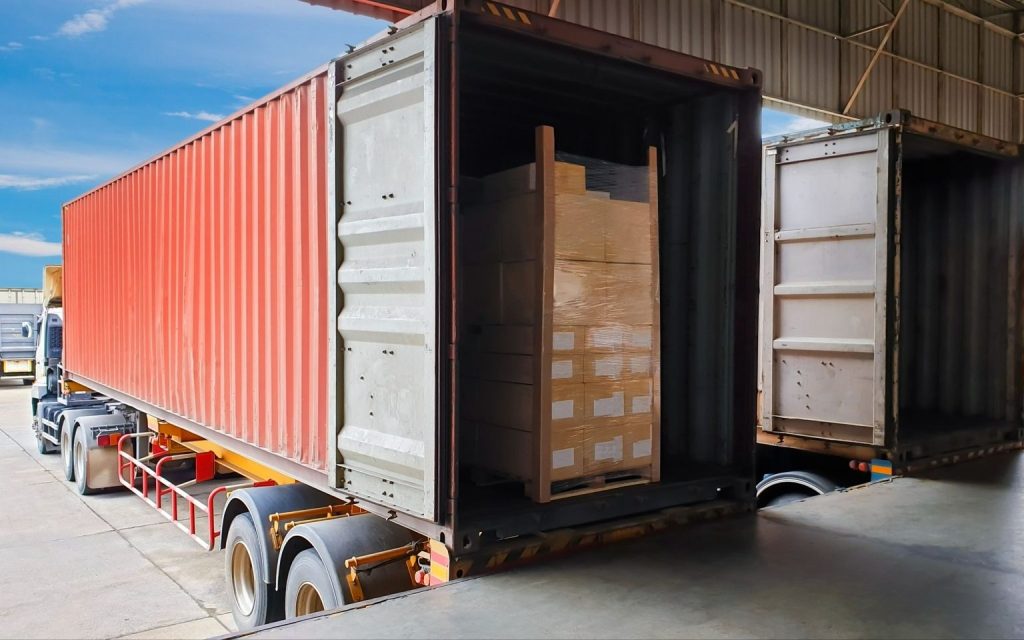
For Malaysia-Singapore shipping, cross-border trucking is a common option, particularly because of the direct land connection between Johor and Singapore. Businesses can choose from several shipping methods depending on the shipment size, urgency, and type of goods:
- FTL (Full Truckload): Suitable for larger shipments that require a dedicated truck.
- LTL (Less-than-Truckload): Suitable for smaller shipments that can share truck space with other cargo.
- Courier: Ideal for small parcels, documents, and e-commerce orders.
- Air Freight: A faster option for urgent or high-value shipments.
- Sea Freight: Suitable for larger-volume shipments where delivery speed is less critical.
FTL vs LTL
For businesses using road freight, FTL and LTL are the two main options to consider. The better choice depends largely on how much cargo you are shipping and whether you need dedicated transportation.
| Shipping method | Best for | Main advantage | Consideration |
| FTL | Large shipments that can fill most or all of a truck | Direct transportation and fewer handling points | Usually more expensive for smaller shipments |
| LTL | Smaller commercial shipments | Pay for the space you use rather than the whole truck | May involve consolidation and additional handling |
What Kinds of Products Are Shipped Between Malaysia and Singapore?
The types of products moving across the border vary considerably. Common categories include:
- Food and beverages
- Electronics and electrical products
- Machinery and equipment
- Chemicals and manufactured materials
- Retail inventory
- Furniture and household products
- E-commerce orders
The right shipping and customs requirements will depend on what you are moving, as some products may be controlled or require additional permits.
Why Reliable Cross-Border Shipping Matters for Your Business
Reliable cross-border shipping helps keep costs predictable, deliveries on schedule, and goods moving smoothly between Malaysia and Singapore.
- Avoid customs delays: Incorrect HS codes (Harmonized System code used to classify goods for customs), incomplete documents, missing permits, or inaccurate shipment values can hold up clearance and delay the shipment from reaching its destination.
- Calculate the landed cost accurately: The transportation quotation is only part of what you pay. Duties, GST or sales tax, customs clearance, handling, documentation, insurance, and other charges can all affect the final landed cost.
- Protect delivery schedules: When inventory needs to arrive on time, unexpected customs or border delays can disrupt production, order fulfilment, and customer deliveries. A well-planned shipping process helps keep your supply chain moving.
- Prevent unnecessary tax payments: Correct product classification and valid proof of origin can help you determine whether your goods qualify for preferential tariff treatment, potentially reducing the duties payable.
- Maintain compliance: Shipping between two countries means meeting the import and export requirements of both. Having the right documents and declarations in place helps keep the shipment compliant and avoids issues during clearance.
- Support business growth: When your shipping process can keep up with growing demand, you can serve more customers, maintain reliable delivery, and expand into new markets with greater confidence.
How to Ship from Malaysia to Singapore?
Malaysia exports a wide range of goods to Singapore, including electronics, semiconductor-related equipment, and refined petroleum products. Whatever you are shipping, the typical process for shipping commercial goods from Malaysia to Singapore includes the following steps:
- Know What You’re Shipping: Start by identifying the product and its HS code. The classification can depend on factors such as the product’s material, composition, function, and specifications, so it is worth getting this right before the shipment moves.
- Check the Import Requirements: Before your goods leave Malaysia, check whether they are controlled, prohibited, or require additional approval in Singapore. The HS/CA Product Code Checker can help you identify whether a Competent Authority has additional requirements for your product.
- Get Your Documents in Order: Have your commercial invoice, packing list, transport documents and shipment details ready, including the quantity, value, HS code, country of origin and package information. Depending on your goods, you may also need permits, product certificates or proof of origin.
- Choose How Your Goods Will Travel: Choose the transport option that fits your shipment. When comparing quotations, check what is included so you know whether pickup, customs clearance, delivery and other charges are covered.
- Handle Malaysia Export Requirements: Before the shipment leaves Malaysia, check whether your goods require an export declaration, permit, licence or other approval. Your freight forwarder can help handle the required formalities.
- Submit the Singapore Import Permit: The Singapore importer or its appointed Declaring Agent generally submits the relevant import permit through TradeNet before the goods enter Singapore.
- Account for Taxes and Other Charges: Depending on the goods, GST and customs or excise duties may apply. It is also worth looking beyond the freight rate itself and accounting for clearance, handling, storage and delivery when working out what the shipment will actually cost you.
- Get Customs Clearance and Deliver the Goods: Once the necessary requirements have been completed, your goods can be released for delivery. Keep your invoices, permits, transport documents and other supporting records on hand in case they are needed later.
Common Documents for Malaysia-to-Singapore Shipping
The exact documents depend on the shipment and product, but businesses commonly need:
| Document | Purpose |
| Commercial invoice | Shows the seller, buyer, goods, quantities, and declared value |
| Packing list | Provides details of packages, weights, and contents |
| Customs permit | Declares the shipment to customs |
| Bill of Lading/transport document | Provides transportation and cargo information |
| Certificate or proof of origin | Used only when origin needs to be established, including preferential tariff claims. It is not automatically required for every shipment |
| Import/export licences or permits | Required for certain controlled goods |
| Insurance documents | Relevant when cargo insurance is purchased |
What Are the Costs Involved When Importing to Singapore?
There is no single standard cost for shipping goods from Malaysia to Singapore. The final landed cost depends on the shipment size, route, product, customs classification, transportation method, and service level.
Businesses should generally consider:
- Freight charges
- Fuel or transportation surcharges
- Pickup and delivery charges
- Customs clearance fees
- Documentation or permit fees
- Singapore GST
- Customs duty, if applicable
- Cargo insurance
How to Calculate Singapore GST for Singapore Imports?
Singapore’s current GST rate is 9%. For imported goods, GST is generally calculated on the customs value of the shipment, plus any applicable customs duties and other relevant charges.
For example, if your shipment has a CIF value of S$10,000 and no customs duty applies, the import GST would generally be:
S$10,000 × 9% = S$900
The CIF value generally covers the cost of the goods, insurance, and freight. If customs duty applies, it is generally included when determining the amount subject to GST. The exact calculation can vary depending on the shipment and applicable customs valuation rules.
Are all goods subject to customs duty?
No. Singapore applies customs duty to specific categories of dutiable goods (intoxicating liquors, tobacco products, motor vehicles, and petroleum products or biodiesel blends), while many other goods are non-dutiable but still subject to GST.
The applicable treatment depends on the HS code and product category.
Singapore’s De Minimis and Low-Value Goods Rules
Singapore provides import GST relief for qualifying goods imported by air or post when the CIF value does not exceed S$400, subject to the relevant conditions.
However, this relief does not generally apply to commercial goods imported by land or sea.
This is particularly important for Malaysia-Singapore shipping because road freight is one of the most common transport methods. A shipment valued below S$400 should not automatically be assumed to be GST-free simply because it is a low-value shipment.
How to Ship from Singapore to Malaysia?

1. Identify the goods and HS code
Correct classification is essential for determining applicable duties, taxes, and regulatory requirements.
2. Check Malaysian import restrictions
Some goods require licences, permits, approvals, or additional documentation before they can be imported.
3. Prepare the documents
The exporter should provide the commercial invoice, packing list, transport documentation, and any relevant origin or regulatory documents.
4. Arrange transportation
Road freight is generally the most practical option for many Malaysia-Singapore shipments, although courier, air and sea freight may be appropriate depending on the cargo.
5. Singapore export clearance
The exporter or appointed Declaring Agent completes the relevant Singapore export declaration.
Singapore Customs states that an approved export permit and supporting documents may need to be presented at the checkpoint when the permit conditions require it or when the goods are dutiable or controlled.
6. Malaysian import clearance
The importer or appointed customs agent submits the required import declaration to the Royal Malaysian Customs Department.
7. Pay applicable Malaysian taxes and duties
The applicable import duty and sales tax depend on the goods, tariff classification, origin, and any relevant exemption or preferential tariff arrangement.
8. Customs release and delivery
Once clearance is completed, the goods can be delivered to the Malaysian consignee.
Common Documents for Singapore-to-Malaysia Shipping
Businesses commonly prepare:
- Commercial invoice
- Packing list
- Bill of Lading, consignment note or Air Waybill
- Malaysia Import Declaration (K1 Form)
- Singapore export permit
- Certificate of Origin or other proof of origin, where applicable
- Import licences or permits for controlled products
- Other supporting documents requested by Malaysian Customs or relevant agencies
Malaysia Customs specifically states that importers seeking preferential tariff treatment may need an import declaration, Proof of Origin such as a Certificate of Origin, Declaration of Origin or e-Form D, together with supporting documents such as the invoice, bill of lading and packing list.
What Are the Costs Involved When Importing to Malaysia?

The cost of importing goods from Singapore into Malaysia can include:
- International or cross-border freight
- Customs clearance
- Import duty
- Sales tax on imported goods
- Customs agent fees
- Documentation charges
- Storage charges
- Insurance
- Delivery charges
Malaysian Sales Tax on Imports
If you are bringing goods from Singapore into Malaysia, sales tax (SST) may apply to taxable imported goods. The rate depends on the type of product:
- 10%: Applies to most general manufactured and luxury taxable goods.
- 5%: Applies to selected items, including certain basic foodstuffs, IT equipment, and building materials.
- 0% or exempt: Applies to selected essentials, books, and certain raw materials or machinery under specific exemptions.
- Low-Value Goods (LVG): Online purchases valued at RM500 or less and sent from overseas may be subject to a 10% sales tax, subject to the applicable LVG rules.
For export-oriented manufacturers, Licensed Manufacturing Warehouses (LMWs) can also provide tax exemptions on eligible imported raw materials, components, machinery, and equipment used directly in manufacturing. This is designed to support businesses that primarily produce for export.
Because the tax treatment can vary by product and business arrangement, check the HS code and applicable SST rules before shipping so you have a clearer picture of your import costs.
What About Import Duty?
Import duty depends on what you are bringing into Malaysia and where the goods come from. If your goods are from Singapore and meet the relevant ASEAN rules of origin, you may be able to enjoy preferential tariff treatment, which can lower the duty you pay. You will need the right Proof of Origin to make the claim.
Transit Time for Malaysia-Singapore Shipping
Transit time depends on the origin and destination, shipment type, carrier, customs clearance, and traffic conditions.
For road freight, businesses should distinguish between transport transit time and total delivery time. A truck may physically cover the Malaysia-Singapore route relatively quickly, but the shipment can still take longer because of:
- Pickup and delivery scheduling
- Consolidation
- Import and export clearance
- Border queues
- Customs inspection
- Peak-period congestion
- Documentation issues
For this reason, a freight provider should ideally quote an expected end-to-end transit time, rather than simply stating how long the vehicle is expected to be on the road.
Common Challenges in Malaysia-Singapore Shipping
- Incorrect HS codes: Using the wrong HS code can lead to incorrect duty calculations, customs queries, or shipment delays.
- Incomplete commercial invoices: Vague descriptions such as “parts”, “samples”, or “goods” may not provide enough information for customs classification. Include clear details about the product, quantity, value, and material or function where relevant.
- Missing proof of origin: If you are claiming preferential tariff treatment, you need the appropriate proof of origin and must meet the relevant rules of origin.
- Controlled products: Certain goods require additional permits, licences, or approvals. These requirements should be checked before the shipment leaves the origin country.
- Incorrect declared value: Under-declaring goods to reduce taxes can create compliance issues. The declared value should accurately reflect the transaction and applicable customs valuation rules.
- Border congestion: Road shipments can be affected by traffic, checkpoint congestion, peak periods, and other border disruptions.
- Unexpected charges: A low freight quotation does not always mean a low landed cost. Customs, handling, storage, documentation, and tax charges can add to the final bill.
- Poor communication between parties: The exporter, importer, freight partner, customs agent, and receiving warehouse need to work from consistent shipment information. Mismatches between documents can create avoidable questions during clearance.
Tips to Ensure an Efficient Import and Export Process

- Have your documents ready before pickup: Preparing the commercial invoice, packing list, transport documents, and permits in advance gives your freight partner what they need to move the shipment without unnecessary back-and-forth.
- Describe your goods clearly: A clear product description helps customs understand what you are importing and makes it easier for your freight partner to prepare the shipment correctly.
- Check whether your goods qualify for preferential tariffs: If your products meet the relevant rules of origin, the right proof of origin may help you access lower or preferential tariff treatment.
- Look beyond the freight rate: A cheap quotation does not always mean a cheaper shipment. Check what is included, from pickup and customs clearance to duties, handling, and final delivery, so you have a clearer picture of your actual landed cost.
- Give yourself some delivery buffer: Border traffic, customs checks, and other unexpected delays can affect delivery times. Building some flexibility into your schedule gives your business room to handle these without disrupting customers or operations.
- Keep shipment information consistent: Make sure the details across your invoice, packing list, customs declaration, and transport documents match. This helps reduce questions and avoidable delays during clearance.
- Choose a partner who knows both sides of the border: An experienced freight partner familiar with Malaysia and Singapore can coordinate the cross-border movement and customs process more smoothly, giving you fewer logistics details to manage yourself.
How to Choose the Right Freight Partner for Malaysia-Singapore Shipping
When comparing freight partners, consider the following factors:
| What to look for | Why it matters |
| Malaysia-Singapore route experience | Familiarity with the route and border procedures |
| Customs clearance support | Reduces the administrative burden |
| FTL and LTL options | Allows the service to scale with shipment size |
| Clear pricing | Reduces unexpected charges |
| Shipment tracking | Helps businesses monitor delivery progress |
| Documentation support | Reduces errors before clearance |
| Controlled-goods knowledge | Important for regulated products |
| Door-to-door service | Simplifies coordination |
| Cargo insurance options | Provides additional protection |
| Responsive communication | Helps resolve customs or delivery issues quickly |
Recent Trends and Developments Improving the Shipping Process
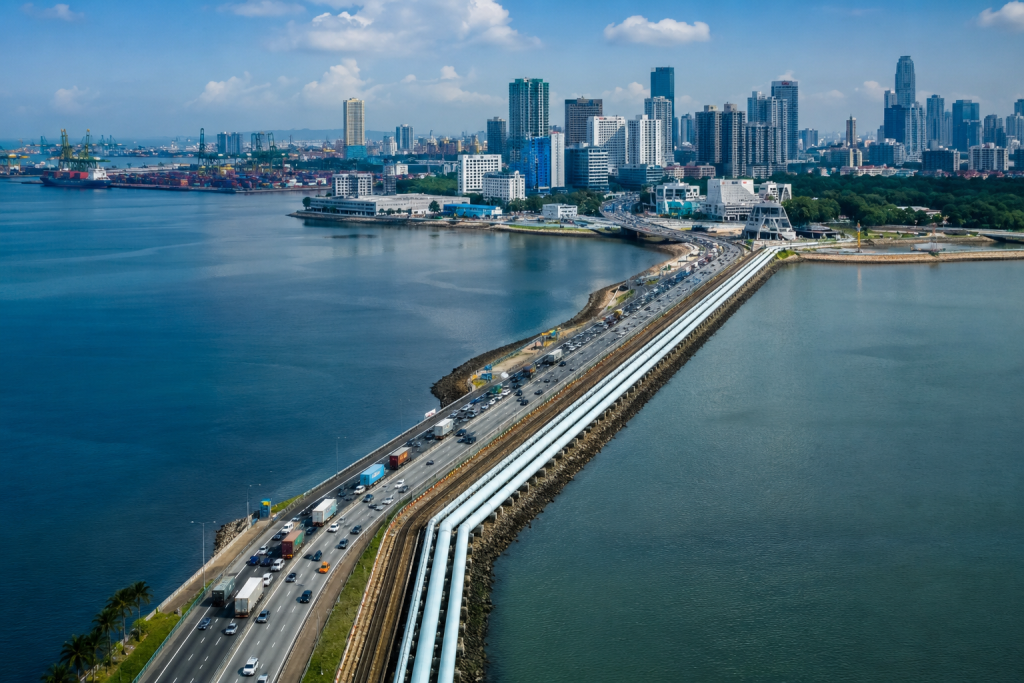
- Johor-Singapore Special Economic Zone (JS-SEZ)
The JS-SEZ agreement was signed on 7 January 2025 to strengthen business links between Johor and Singapore. With businesses able to use Johor for areas such as manufacturing and warehousing and Singapore for logistics and regional operations, cross-border trucking and distribution are expected to play an increasingly important role.
- More digital customs processes
Malaysia is moving more customs procedures online through systems such as ePAM, ePermit, eManifest and eDeclare. For businesses, this means more shipment information can be submitted ahead of time, making the clearance process easier to manage.
- More paperless shipping
More freight providers are handling invoices, packing lists, permits, and customs documents digitally. This makes it easier for everyone involved to share the same shipment information and catch potential issues before the goods reach the border.
Conclusion
Getting goods from Malaysia to Singapore, or vice versa, involves more than simply crossing the border. It requires the right processes, information, and people in place so that a shipment does not become a problem at the point where it matters most.
Looking for a reliable partner for your Malaysia-Singapore shipments? Reach out to us for cross-border trucking and freight services tailored to your business needs. From transportation and customs clearance to final delivery, our team can help coordinate the process and keep your shipments moving smoothly across the border.
Frequently Asked Questions
1. Do I need a Form D when shipping between Malaysia and Singapore?
Not always. Form D is mainly used when you want to claim preferential tariff treatment under ATIGA. If your goods meet the relevant rules of origin and you want to claim the preferential tariff, you will need the appropriate proof of origin. Otherwise, Form D is not required for every shipment, whether you are shipping from Malaysia to Singapore or vice versa.
2. How long does shipping from Malaysia to Singapore take?
Shipping typically takes around 9 days, depending on the transport method and shipment details. Customs checks, permits, incomplete documents, peak periods, weekends, and public holidays can extend delivery times, while shipments from East Malaysia may take longer.
3. What is an HS code and why does it matter?
An HS code (Harmonized System code) is used to classify goods for customs and international trade. The correct classification can affect the duties, taxes, permits, and other requirements that apply to your shipment, so it is best to confirm it before shipping.
4. What happens if my shipment is held by customs?
Customs may hold a shipment if they need additional documents, clarification, inspection, permits, or payment. Your freight forwarder can help identify what is needed to clear the shipment. Having accurate shipment details and documents ready can help reduce unnecessary delays.
5. What is the cheapest way to ship between Malaysia and Singapore?
It depends on the size and urgency of your shipment. LTL or courier may make more sense for smaller shipments, while FTL can be more cost-effective for larger volumes. When comparing options, look at the overall landed cost, not just the initial freight rate, as customs, taxes, handling, and delivery charges can also add to the final cost.